The trek from firm to business.
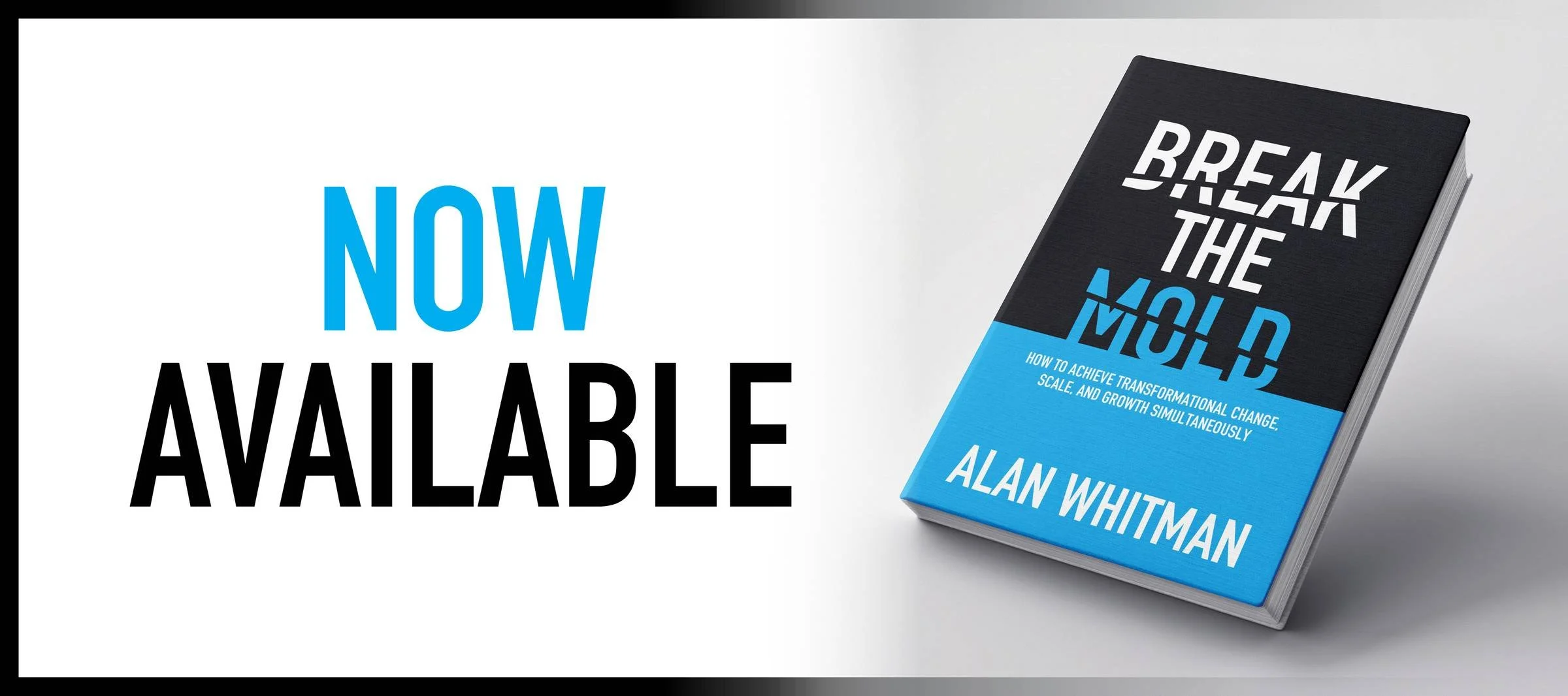
I've distilled all my growth, scaling, and transformation principles into one tactical guide—told through the lens of storytelling. Order my book, Break the Mold: How to Achieve Transformational Change, Scale, and Growth Simultaneously, today on Amazon.
The Trek from Firm to Business
I’ve had a few people ask me about what operating inside a company with a strategic partner, like a private equity investor, is like.
I think people are expecting to hear stories of the investor pounding on the table for results, making broad-stroke cuts, and breathing down the leadership team’s neck for status updates and revenue projections.
If I had to sum up the experience of leading a company with a strategic partner, the simplest answer is: We’re no longer running a lifestyle firm.
And it’s a great thing—because it’s exactly how organizations should operate in today’s environment.
Yet the reality is, many don’t.
Whether you are a partnership, a public company, or have a strategic sponsor of some kind, everyone is playing the same game: Do what it takes to build a relevant and sustainable organization.
And to do that, the first step is accepting that “good enough” is not going to cut it. And that begins the trek from a lifestyle firm to a professional business.
The lifestyle firm
In the early stages of an organization’s life, it’s common to build a lifestyle business. To be clear, this isn’t about yachts or vacation homes. It’s about a mindset—a way of operating that’s rooted in the present rather than the possible.
A lifestyle firm lives for the here and now. The approach is linear and incremental: do the work, bill the hours, repeat. Work hard, try our best, and if growth happens, great. If it doesn't—well, good enough is good enough.
In a lifestyle business, there's no grand design. No guiding vision. No deliberate march toward a defined future state. Metrics, if they exist at all, are backward-looking: Did we do better than last year? Did the partners make more? If so, success is declared.
In a lifestyle firm, the results just… result.
“Ok, Whitman, what’s the problem with that?”
It’s not that running a lifestyle firm is necessarily wrong.
It’s that running a lifestyle firm makes you more vulnerable.
More vulnerable to:
Shifts in the marketplace
Losing the battle for talent
Not keeping up with technological advancements and investments
Losing relevance and market share
Winning in the short term, not the long term
Like it or not, the reality is that you aren’t building a business in a vacuum. You are operating in a dynamic landscape and competing for resources, talent, market share, etc.
I’d argue that if you’re not being intentional about setting a direction for your organization, approaching your future state with discipline, and making the necessary investments to get there, you are falling behind.
And while that may not mean anything tangible in the short term, you gradually slip back until one day, you’re suddenly on the outside looking in.
That’s the result of running a lifestyle firm.
But there’s a different way. A better way.
Shifting to a professional business
In a professional business, good enough isn’t good enough.
Shifting from a lifestyle firm to a professional business requires a firm to stop grading on past comfort and start measuring progress against true objectives.
And the reality is that PE can be one of many catalysts for this shift.
So while you might wonder what it’s like to operate in a PE-backed environment, I’d tell you that it’s not about PE. It’s about operating in a strategy-driven, results-focused organization.
And in that case, there are a few specific shifts that separate that type of professional business from a lifestyle firm:
Intentionality.
A lifestyle firm lets the results result. A business is intentional about what it's going to accomplish and works backward from there. I suppose you could argue the results still result, but in this case, they result from disciplined action aligned to a clear future state. That’s different than trying your best and being ok with whatever happens.
Outside eyes.
A lifestyle firm mostly answers to itself. The same partners, same history, same assumptions, year after year. A business puts someone from the outside in that room. It can be uncomfortable, at times, AND that's exactly the value. They aren't anchored to how we've always done things. They look at the same data we're looking at and ask different questions. And they help us maintain a commitment to objective standards vs subjective comfort.
Speed.
In a lifestyle firm, there's always next year. In a business, speed is the game. The market moves quicker than it used to, and decisions that used to be sat on now need to happen faster—which only works when everyone is aligned to the same future state. Then there’s also the output side. Inside Nichols Cauley, we’re making AI and technology investments to increase our speed and enable our people to do more and/or shift their focus to higher-value work. We recognize speed is the name of the game, and we’re using internal alignment and systems to move faster.
More use of data.
We’ve got more data in one workbook at Nichols Cauley than I’ve seen most professional services organizations have. We’re using last year's and last month’s data, along with our forecasting and pipeline numbers to model and build a path toward our desired future. And this data is updated all the time, tracked regularly, and discussed often amongst the leadership team to inform future decisions. This way, we’re intentional and proactive in making our month, our quarter, our year.
Why it matters
Every organization either grows or becomes less relevant. Relevance and sustainability are the name of the game, and those are the things that create lasting value. Whether you've got a strategic partner or not has no impact.
A lifestyle firm can coast on relationships and history for a while. Those things can shield underperformance and let effort stand in for outcome—right up until they can't.
A business doesn't have that luxury. It sets intentional, sometimes uncomfortable standards, and it has the discipline to see them through. That's the line between good enough and exceptional. Between surviving and thriving.
With intention,
Alan Whitman
CEO at Nichols Cauley
Whenever you're ready, here are 3 ways to engage with me, my content, and what we're building at Nichols Cauley:
Follow me on Linkedin for daily posts on leadership, thinking differently, and building a company in public.
Buy my book, Break the Mold, to read in depth about how to apply my principles to achieve transformational change, growth, and scale simultaneously.
Join us on the journey: View career opportunities at Nichols Cauley and join on us as we build something really special.