Two Markers of a Company Built to Last
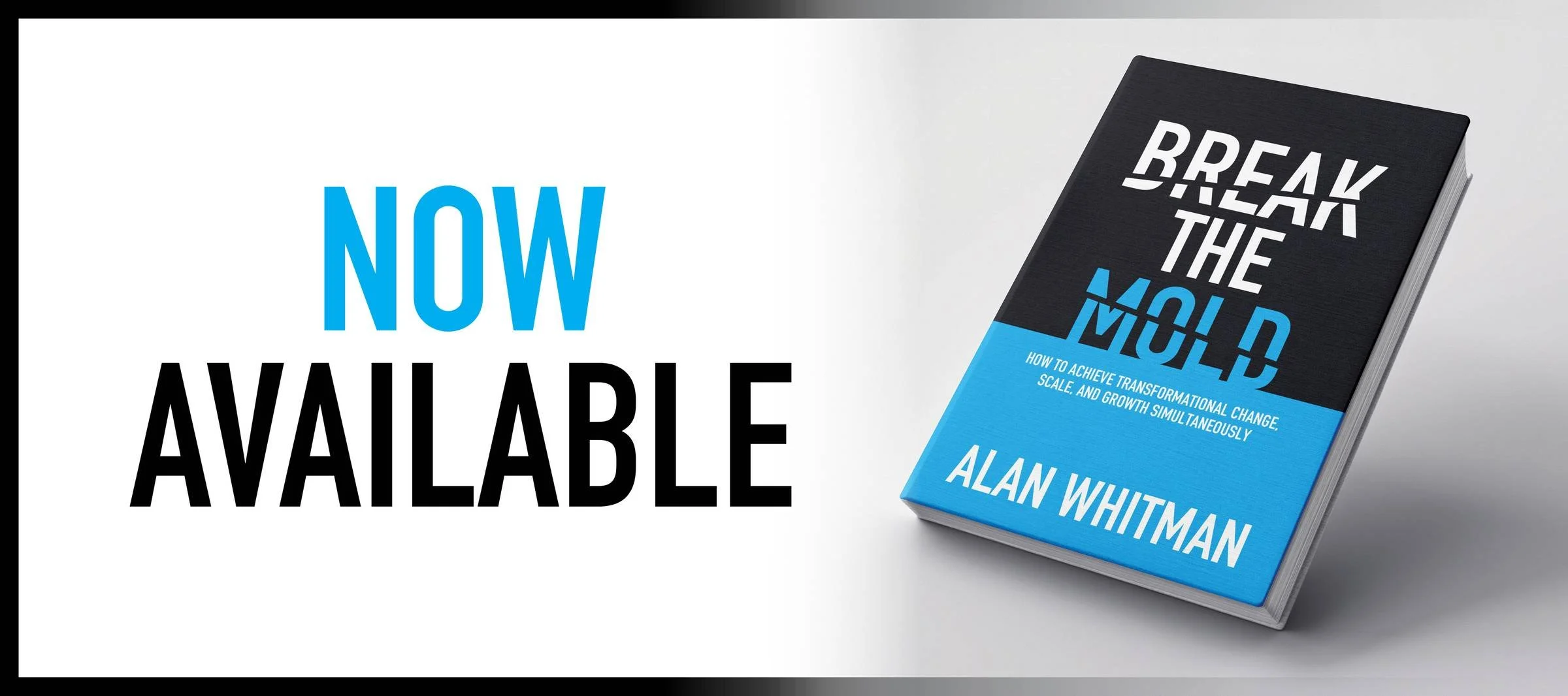
I've distilled all my growth, scaling, and transformation principles into one tactical guide—told through the lens of storytelling. Order my book, Break the Mold: How to Achieve Transformational Change, Scale, and Growth Simultaneously, today on Amazon.
I remember being on stage a few years ago at a Partner meeting and sharing the message with our leaders:
“The competition here is with ourselves. How do we become a better version of us?
At the center are our clients. Not our competitors. We are not here to beat our competition. That is not why we are in business.
We are here to help our clients…to enhance and protect their value.
We are not playing to win. We are playing to keep playing. To remain relevant and sustainable.”
Relevant and sustainable...
The two words that should serve as the holy grail for any company.
If you can remain relevant and sustainable, you can continue playing the game of business (and likely thriving along the way) for years to come. If you can’t, you are vulnerable to outside factors negatively impacting your business and success.
But what does relevant and sustainable mean? How do you know if/when you’re there? And once you’re there, how do you stay there?
Relevant...to whom?
Relevance is a reflection of your standing in the marketplace.
The thing is, you don't get to decide if you are relevant or not. Your prospective clients, current clients, prospective employees, current employees, and others in your profession will decide it for you.
Being relevant is about being invited to the party—and you don't get to invite yourself.
Here are signs of relevance I look for in professional services firms:
Being in the conversation for major client opportunities
Appealing to the best talent
Strong social media engagement and following
Consistently winning meaningful work
A sought-after voice on industry topics (speaking engagements, interviews, consultation requests)
Of course, the people you need to be most relevant to will be dictated by your ideal client and the type of talent you need to be able to attract and retain.
In our case, at Nichols Cauley, we’re a financial services company delivering comprehensive advisory solutions to small to midsized businesses and their owners in the Southeastern US.
So we need to ensure we’re relevant to that audience, in particular, and then also to the team that we currently have and will need in the future to continue delivering value-added solutions to that client.
The key thing to remember here is that relevancy is in the eyes of the beholder. You don’t get to decide it, but you can influence it.
How do you increase your relevancy?
Well, I'd boil it down to two things:
1) Delivering a service or product that is both needed and valued.
Good luck being relevant if you're delivering something no one wants or needs. If that's the case, your solution won't be valued and you're essentially an afterthought.
If this is the case, there's likely some adjusting that needs to be done with your service offering, who your target client is, or your messaging.
The way you structure and communicate the solutions you provide should make a clear and compelling case as to how they add value to your ideal client.
Hint: If you’re struggling with this, go talk to your clients and/or ideal clients. Understand what it is they are wanting to solve and where their challenges are, and figure out how to alleviate them.
2) Building a brand for yourself / your company so that you are known (by prospective clients, in the industry, and by the best talent).
The greatest company/service/product that nobody's ever heard of? Not a formula for success and certainly not a formula for relevance.
Companies have to demonstrate their relevance through marketing, personal brand building of key leaders, demonstrating subject matter expertise, etc.
Prove that you have value to add to the conversation and make sure that your brand is known so that when it's time, you get an invite to the party.
For me, remaining relevant has meant showing up consistently and with something differentiated to say.
If you’ve been following along the last couple years, I’ve been posting on LinkedIn, sending newsletters (what you're reading...), appearing on podcasts, and speaking at conferences to maintain my relevance, and now Nichols Cauley’s relevance in the marketplace.
It’s not just that I’ve been showing up though… It’s that I’m committed to stating what many think and few, if any, are willing to say. I have a unique perspective that’s deeply rooted in experience. That part can’t be overlooked because it’s not just about showing up, it’s about having something differentiated to say.
Exercise: Posting on LinkedIn is free exposure. Here are 3 post ideas you could create and share this week: - What’s one common roadblock your ideal client is facing, and how can they overcome it? - What’s one trend you’re seeing in your industry or service area, and what’s the impact? - What’s one example of success you’ve had in the last 30 days with a client? Write about the situation, the process, and the outcome.
So, to sum it up: Relevancy is a result of consistently showing up and adding meaningful perspectives to the marketplace and delivering a service/product of value.
Sustainable...in what ways?
The best way I can summarize being sustainable is this:
Your growth is systems-driven, not event-driven.
Sit in a pond full of fish long enough, and one might jump into your boat.
That's an event.
But what about when the fish change habits? More boats appear? Or there's less fish?
Well, if your success was fueled by waiting for the event of a fish jumping in your boat, you might be in trouble. What if that stops happening?
Similarly, for professional services companies, if your year is made by a select group of individual performers, one-off large projects, or referrals without any sort of outbound sales engine, you’re succeeding based on events.
And while that may be okay for now, it’s unlikely to deliver durable and consistent results in the future.
Sustainable organizations, on the other hand, are fueled by systems—I call them engines.
Those engines could be sales engines, people development engines, marketing engines, service-delivery engines, talent acquisition engines, etc.
Engines are defined systems and processes that are done with people, for people, and in spite of people to create predictable outcomes that drive strategy.
I wrote more about engines here.
A good test for this is assessing key-person risk. If your best producer walked out the door tomorrow, what would happen to your business?
In an unsustainable business, when that person walks out the door, they take their relationships, systems, know-how, expertise, and the company is left with a hole.
But when a company is systems-driven, individuals still matter and make an impact, but they don’t crumble the machine if they’re no longer there.
In that case, current success is an indicator of future success because the systems that brought about results will likely continue producing results down the line.
That's sustainability in a nutshell.
Exercise: Name that key person for your company. Who consistently produces results or is critical to client delivery? Now list what walks out the door with them — relationships, know-how, undocumented processes, etc. What would be unaccounted for if they left? Whatever is on that list is your engine-building backlog for the next 90 days.
What are signs that your company is sustainable?
You'll know you have a sustainable organization when you are:
Documenting and creating processes for key parts of the business
Using technology and AI to reduce human touches
Consistently producing desired results, no matter what’s happening inside or outside the business
Acquiring and retaining top talent
Maintaining high net promoter scores
Building new engines and constantly refining the ones you have
Similar to relevancy, achieving sustainability is an ongoing effort.
You have to run your business and transform it at the same time.
Just because you are relevant now doesn't guarantee you will be in the future.
When results are consistently repeated and become predictable, you've achieved sustainability.
Which one is more important?
Frankly, I don't think one without the other gets you too far.
I guess you could make the argument that being relevant at least might earn you the opportunity to build sustainability...
But I'd say they feed into one another.
If you're relevant but not sustainable, you'll win in the short term and then likely fizzle out.
If you're sustainable but not relevant, you'll keep chugging along without growing at a high rate or being a part of the conversation.
It's a both/and—so they should be invested in accordingly.
I can tell you this: it's the relevant and sustainable organizations that will thrive in the future. You're either one of them, or you're on the outside looking in.
That's it for this week. See you next time.
With intention,
Alan Whitman
CEO at Nichols Cauley
Whenever you're ready, here are 3 ways to engage with me, my content, and what we're building at Nichols Cauley:
Follow me on Linkedin for daily posts on leadership, thinking differently, and building a company in public.
Buy my book, Break the Mold, to read in depth about how to apply my principles to achieve transformational change, growth, and scale simultaneously.
Join us on the journey: View career opportunities at Nichols Cauley and join on us as we build something really special.