90 Days as CEO: Reflections & Learnings
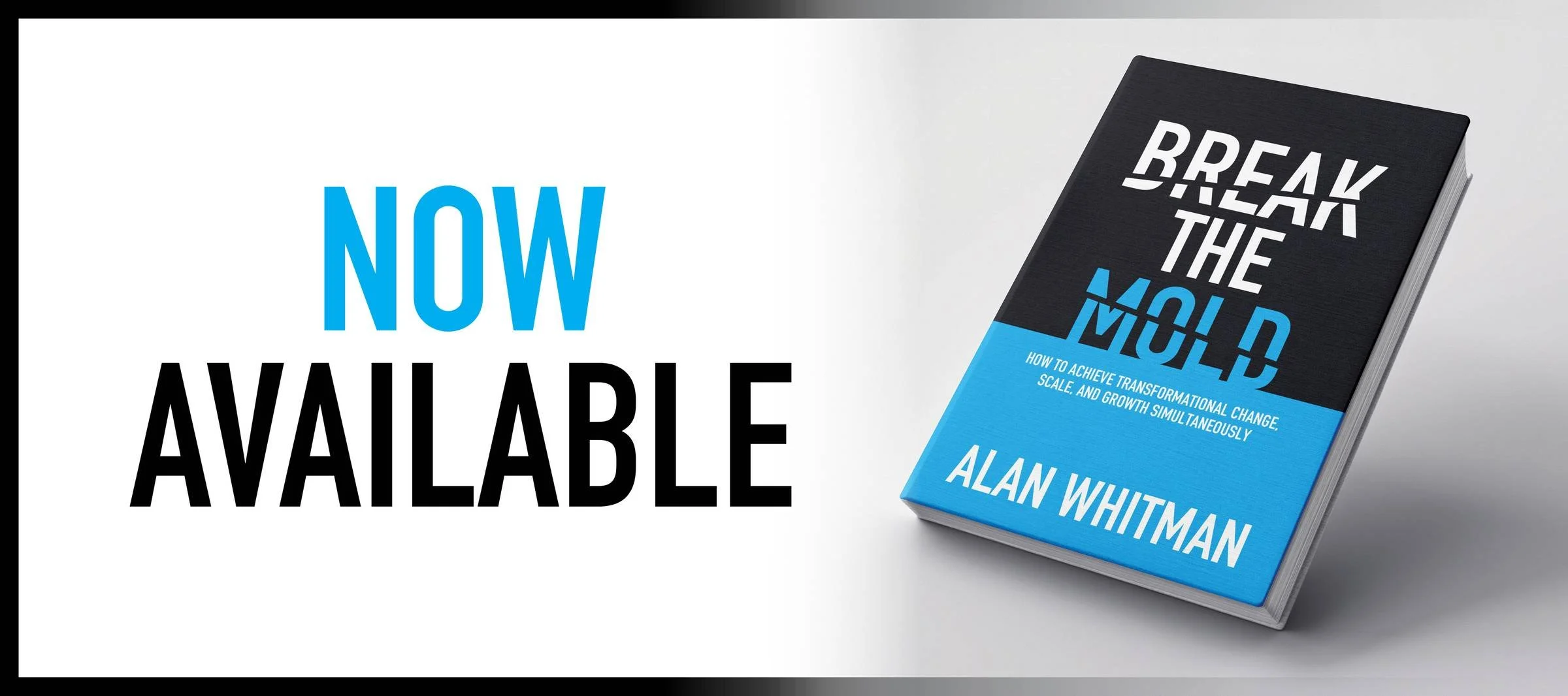
I've distilled all my growth, scaling, and transformation principles into one tactical guide—told through the lens of storytelling. Order my book, Break the Mold: How to Achieve Transformational Change, Scale, and Growth Simultaneously, today on Amazon.
90 Days Back in the CEO Chair: Reflections and Learnings
I’m 90 days into my journey as CEO of Nichols Cauley and 90 days into my personal thought-experiment of building this company in public and sharing the journey with you all.
In some ways, I’ve been here before. I’ve sat in the CEO seat, so I understand the rhythm of it and know what it takes to progress an organization. So on that front, it feels very familiar…and quite good to be back.
And yet… it’s also very different. The company and culture are different, and on the personal side, I’m adjusting to some new norms like morning calls and the undying passion for SEC football. I mean, I’m an IU guy, so I do have some bragging rights for the time being…
The best way I can describe the first 90 days is this:
Everything changes….and nothing changes.
I’ve been sharing parts of this experience in real time because I think people like looking behind the curtain. They want to see what it actually looks like to build something. Not necessarily the polished version that appears in press clippings and announcements, but the more real, raw, and personal version.
So here are a few personal reflections, lessons, and learnings as I look back on my first 90 days as CEO of Nichols Cauley.
1. Everything changes… and nothing changes
These last 3 years have been like a metaphorical halftime for me. In between CEO gigs, I got to spend time as an advisor helping CEOs and leadership teams think differently to create progress that led to growth and scaling.
As I’m back in the CEO chair, I’m quickly noticing elements of this role that are different than my prior experiences. The speed of decision-making is faster. The pricing dynamics in acquisitions are different. The overall pace of the environment has clearly increased.
However, when you step back and look at what actually drives success, the fundamentals have not changed at all. Continuing my halftime analogy… the way we play the game has evolved, but the rules of the game are the same. You still have to run the ball, pass the ball effectively, and execute with discipline.
In business terms, that means the winning formula still starts by leading with strategy and executing against it. Progressing an organization still requires trust, collaboration, innovation, and transparency. That hasn’t changed, and it’s not likely to change any time soon.
2. Progress is still the name of the game.
I recently paused when someone referred to me as a “growth-focused leader.”
Am I growth-oriented? Sure, no doubt.
But I’d suggest a more accurate and upstream descriptor is that I’m progress-focused.
I’m relentless in my pursuit to see people grow, develop, and progress as individuals and leaders. I want the business to progress in how we operate, how we collaborate, and how we execute against strategy.
Are those things aligned to growth? Sure, they are.
But they’re not done just for the sake of growth. They’re done because progress is the point.
For example, I have a number of intentional people development initiatives in the works. Is developing people a direct growth tactic? Not really. But does it lead to better execution, better leadership, and ultimately better results? Absolutely.
So I see growth and scaling as outcomes of progress. Progress is still the name of the game.
3. Coming from the outside feels different… in a good way.
Last time around, I became CEO after years of leadership experience inside the organization. For better or worse, I was well known by the partners, and I knew the culture and environment I was stepping into.
As a result, my approach was more direct. At times, I was a bit of a bull in a China shop because I knew we needed to challenge thinking and move quickly.
In this case, coming in from the outside creates a natural constraint. It is a governor.
And that’s a good thing.
Being an outsider forces me to slow down and be much more thoughtful about how I engage with people. I find myself being far more conscious of what I say, how I say it, and how it’s going to land.
I don’t get it right all the time. I’ve already caught myself slipping in moments.
But overall, it’s forcing a level of intentionality that is necessary. It’s helping me slow down in a way that ultimately allows us to move forward more effectively.
4. Trust remains the foundation of leadership.
Look, no matter the environment or the opportunity in front of you—trust is still the foundation.
In some of my past leadership experiences, I walked into situations where trust had been eroded. The organization had gone through so much change that people didn’t know what to believe anymore, and a big part of the job was fixing that.
Here, it’s different.
I’m not fixing trust—I’m building it.
But the approach is exactly the same. The game plan is universal. It comes down to listening, being consistent, communicating clearly, being transparent, and following through on what you say you’re going to do.
Leadership is about winning hearts and minds. There’s nothing complicated about it.
And you start to see signals when it’s working.
You see people nodding a little differently in meetings. You hear leaders using the language—calling things “off strategy” or asking “what will it take?”
That’s real. Those moments matter.
And when you see them, you’ve got to recognize them. You’ve got to call them out. You’ve got to reinforce them. Because that’s how it starts to stick.
At the end of the day, trust isn’t built in big moments. It’s built in the small ones, over and over again, with consistency.
5. Less breaking, more building.
I’ve been asked a number of times why I chose to take on this role.
The answer comes down to a few things.
I wanted to work with people who have built companies, not just books of business. I was drawn to the thesis because it felt organically developed and grounded in something real. And I saw an opportunity to lead the building of something the right way.
In past roles, a significant part of the work involved breaking from the past—challenging legacy thinking while trying to build something new at the same time.
That’s where the idea of “Break the Mold” came from.
Here, it feels different.
I’m not spending nearly as much time trying to break from the past. Instead, we’re focused on what we’re building going forward.
It just has a different vibe…and I’m finding it to be quite refreshing.
We’re an established organization with a great history, AND in many ways, it feels like we’re building something new. There’s less friction from the past, which allows us to focus more energy on what’s ahead.
6. I still love the chase.
At the end of the day, one thing has not changed.
I enjoy the process of building.
I enjoy developing people. I enjoy thinking about how to create systems and structures that allow a company to scale. And I enjoy the challenge of taking something that is working and figuring out how to make it better.
There is a certain energy that comes from the chase to improve, to evolve, and to create something meaningful.
That’s what keeps me engaged.
That’s a big part of why I chose to step back into this role, and I’m having a hell of a lot of fun doing it.
Final thought
90 days isn’t a long period of time, but it is enough time to begin to see patterns and understand the dynamics at play. It’s also been enough time for me to say with confidence that I’m glad to be here and I remain unwavering in my belief that we’re building something special.
What is clear to me is that while the environment may change, the fundamentals do not.
Success still comes down to being intentional, being consistent, and executing against a clear strategy.
We are in the early stages of building something.
And in my experience, that’s where the real opportunity—and the real enjoyment—lies.
What questions do you have for me about my first 90 days? Or where we’re taking the organization? Leave a comment, send me a message, or reply to this email. I’ll do my best to answer them in future posts and newsletters.
More to come in a couple weeks.
With intention,
Alan Whitman
CEO at Nichols Cauley
Whenever you're ready, here are 3 ways to engage with me, my content, and what we're building at Nichols Cauley:
Follow me on Linkedin for daily posts on leadership, thinking differently, and building a company in public.
Buy my book, Break the Mold, to read in depth about how to apply my principles to achieve transformational change, growth, and scale simultaneously.
Join us on the journey: View career opportunities at Nichols Cauley and join on us as we build something really special.