The Great AI Distraction
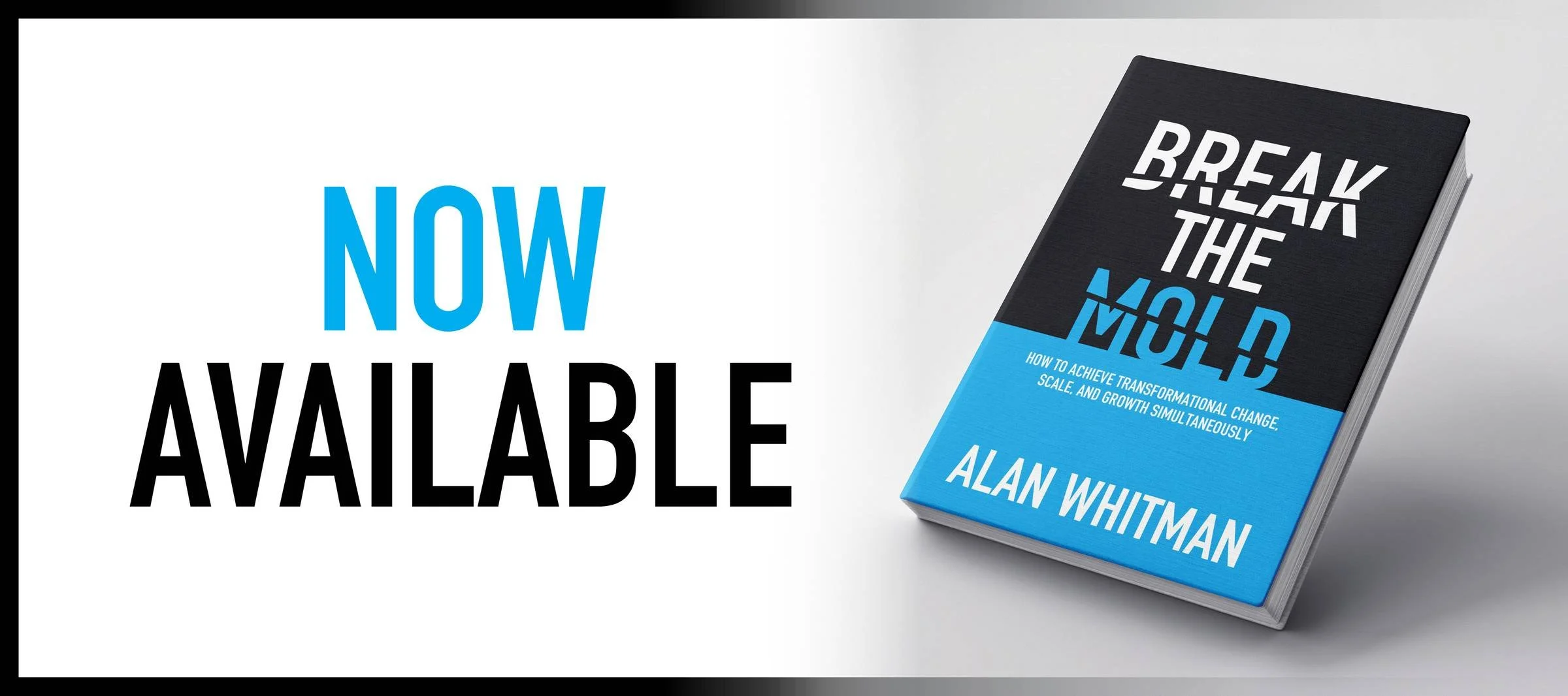
I wrote a book detailing all of my principles for transforming, scaling, and growing an organization simultaneously. For professional services leaders, it's an actionable guide to building a relevant and sustainable organization. Order on Amazon here. If copies aren't available, order a copy of Break the Mold directly through the publisher.
This might be a bit unpopular and, perhaps, a wake-up call for some:
AI has become a distraction.
The hype around AI has risen to a point where it’s causing many leaders to take their eyes off the real prize.
Look around today’s business landscape, and it feels like every company is asking the same question:
“How do we use more AI?”
I’ve seen it in headlines everywhere about how companies plan to revolutionize their talent model and the way they work, all because of AI.
(Btw, I’ve talked to leaders at large companies who share privately that there’s a major gap in the stated aspiration vs what’s actually happening inside these businesses.)
And I understand where the AI hype and headlines are coming from. There’s a lot of noise right now, a lot of pressure to move fast, and no one wants to feel like they’re falling behind. I get it.
But the question of “How do we use more AI?” is misguided because it’s focused on a singular tool.
Meanwhile, the real game (the game of business) hasn’t changed. The winners will be the companies that succeed in remaining relevant and sustainable over time.
So I’d suggest there’s a much more pertinent and impactful question that leaders should be asking of their organizations, and AI might only be ONE path to answering it.
The hype is real… and it’s distracting.
Look, I’m a believer in AI. Let me state that clearly.
It’s the real deal, and I have no doubt it’s going to be a permanent and powerful change agent.
AND…
The hype around AI is distracting leaders from two things that, if they got right, would have a much larger impact on the success of their companies.
1) The impact of AI is only as great as people’s willingness to adopt it.
You can invest in the best tools available, but if your people don’t change how they work i.e. if they don’t actually use those tools consistently and effectively, it doesn’t matter.
Human nature is undefeated. That means people will default to the systems and processes that they are familiar and comfortable with. AI is still relatively new, and the laws of human nature indicate that most people are going to be skeptical.
And the data is starting to reflect that reality.
I keep seeing articles like this one that showcase the gap between the messaging from the top—what CEOs and leaders are stating about their AI goals—and what’s actually happening inside of organizations.
So yes, adoption is happening in some cases, but meaningful adoption is a very different story. In order to truly capture the benefits of a tool like AI, we have to be able to shift people’s mindset about using it.
And I’d suggest there’s still a long way to go there…
2. The fundamentals of building a winning organization haven’t changed.
The companies that win still have a clear and differentiated strategy, they operate with a mindset of collaboration instead of silos, they consistently invest financial and intellectual capital, and they are willing to challenge the status quo and reinvent themselves on an ongoing basis.
AI didn’t change what it takes to win the game of building a relevant and sustainable business!
What it did change is the speed at which we need to operate.
But we shouldn’t confuse speed and efficiency with rewriting the rules.
There’s a greater opportunity at stake.
I recently met with an acquisition candidate. During my conversation with the firm leader, we got to discussing our mutual approaches to offshoring, technology, etc.
Offshoring had been a core part of their growth and delivery strategy in recent years, but now, they were rethinking that.
“Alan, we’re rethinking our entire business model. We’re seeing an opportunity to embrace being more tech-forward, and that likely means we shift away from our offshoring strategy. AI can do what we used to send overseas.”
That conversation demonstrates the greater conversation we should be having: How do the advancements of AI and technology impact our entire business model? What’s possible now that wasn’t before?
The purpose of all of these tools—like AI and many iterations of tools that have come before it—is to help us create greater speed, enhance capacity, and improve efficiency. That’s the objective.
To put it more simply: The goal of any tool is to reduce friction.
But if we limit the scope of impact to automating certain tasks in pre-existing workflows, we’re missing the much greater opportunity at play. This is an opportunity to completely alter the way that we, as services companies, deliver solutions.
What if the systems, processes, and workflows we’ve used are no longer optimal?
That’s a question every company should be considering.
So when I hear leaders say, “We need to implement more AI,” what I hear is a focus on the means instead of the outcome.
A better and more impactful question is: “How do we shift our approach to work that, by doing so, reduces friction and enables greater capacity so that people can do more meaningful work?”
Now we’re starting with an outcome in mind. And that could lead to a whole suite of possible solutions that completely change the way we work. AI is just one of them.
How I’m approaching technology and AI as a CEO
When I stepped into the CEO role at Nichols Cauley, one of the first things I had to acknowledge was that technology and AI are not my area of expertise. I came up as a tax guy, after all.
I knew we needed to become a more technology-led organization (it’s a core part of our strategy), but I also knew I wasn’t going to be the person selecting tools or designing systems. So I made a very intentional decision early on to bring in someone who could.
One of my first hires was Greg Stone.
What I was looking for wasn’t just someone who understood technology, but someone who was a systems thinker. I wanted someone who could look across the organization and understand how work actually flows. And just as importantly, I wanted an outsider. Someone who could come in without the weight of historical assumptions and challenge the way the company has always done things.
Now here’s where we’ve taken a different approach than most…
Greg’s mandate is not to implement AI.
His mandate is to reduce unnecessary human touches and eliminate friction in order to increase efficiency and create capacity.
Notice the framing…
Because once you define the goal as the outcome or result, the potential solutions open up. The solutions to reducing friction to create capacity might involve AI, but they could just as easily involve redesigning a process, eliminating a step altogether, replacing an outdated system, or rethinking how work moves throughout the company.
Early on, Greg has approached his work with a high level of curiosity, spending time understanding our systems and processes and asking “why” over and over again until he gets to the root of how things actually work.
From there, the focus becomes building solutions that reduce friction and free up capacity.
And capacity is the point.
We want our people spending less time on manual, repetitive tasks and more time doing what actually creates value. In our case, that’s helping small to mid-sized business owners manage, protect, and grow their wealth.
So at the end of the day, it’s a BOTH/AND.
AI will absolutely be part of the equation.
AND it’s not the starting point, or the end goal.
A better place to start
Whether you’re a CEO or a manager of a small team, I’d challenge you to rethink your approach to AI adoption.
Instead of starting with AI as the desired solution, start by seeking to identify and eliminate friction.
Take a hard look at your organization and ask yourself:
What does it look like when our people are operating at their highest and best use?
Which processes require unnecessary human touches that are adding friction?
If we were building this process today from scratch, how would it optimally work?
How might technology tools or AI enable that process to be more efficient?
See how it’s a different approach?
Goal: Free up capacity so people can focus on their highest and best use.
Approach: Rethink systems to eliminate friction and reduce unnecessary human touches.
How: Using technology, AI, or any other tools to alter how the process is done.
Now AI can be evaluated as ONE of many potential solutions.
And that’s a more effective approach.
Final thought
AI matters. There’s no question about it.
But using more AI for the sake of using more AI isn’t the right approach.
AI is one of many levers that can help you create a better, faster, more efficient organization.
The companies that win in this next phase won’t necessarily be the ones who win the race to use the most AI.
They’ll be the ones who are intentional about reducing friction, building efficiencies, creating capacity, and ultimately delivering more value to their clients.
That’s a very different mindset.
And in my experience, that’s where the real opportunity is.
With intention,
Alan Whitman
CEO at Nichols Cauley
Whenever you're ready, here are 3 ways to engage with me, my content, and what we're building at Nichols Cauley:
Follow me on Linkedin for daily posts on leadership, thinking differently, and building a company in public.
Buy my book, Break the Mold, to read in depth about how to apply my principles to achieve transformational change, growth, and scale simultaneously.
Join us on the journey: View career opportunities at Nichols Cauley and join on us as we build something really special.