Case Study - Building a Company Strategy: Part 2
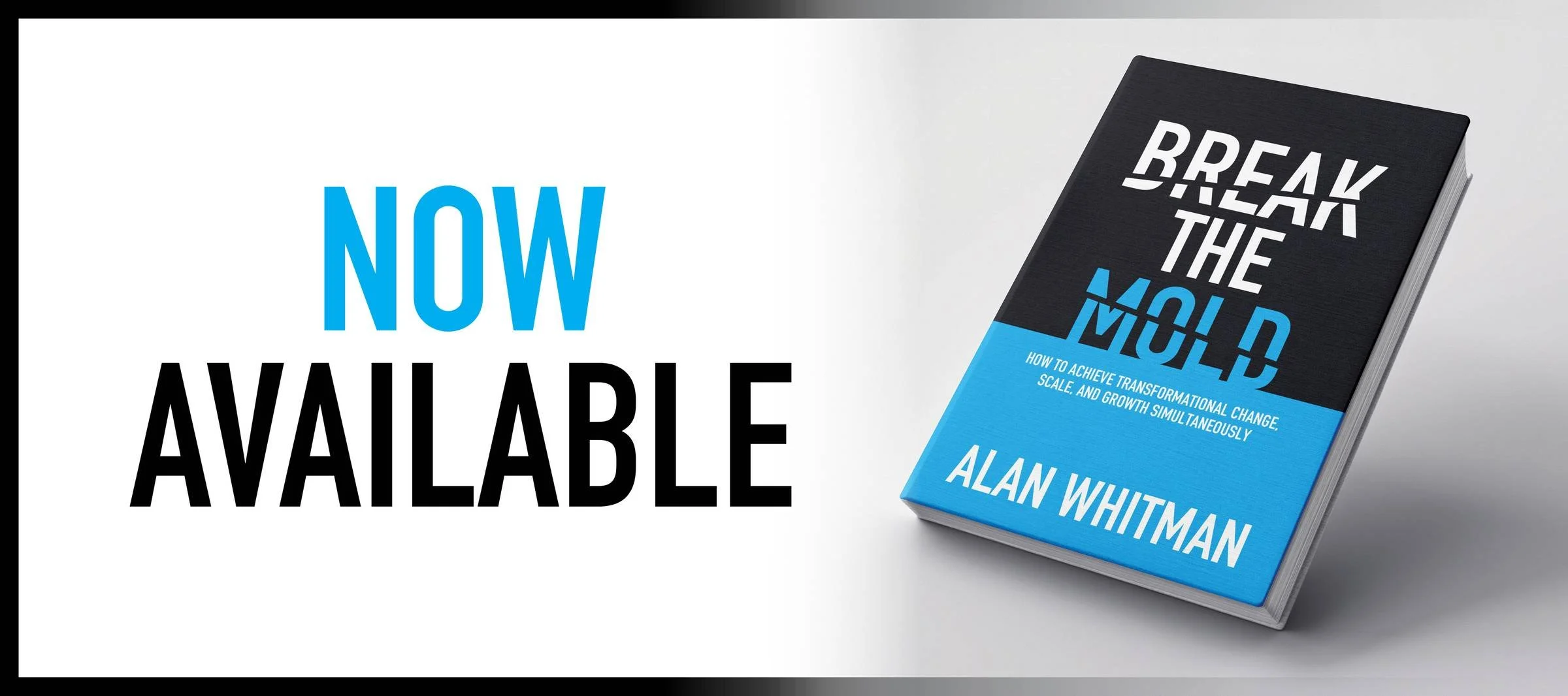
Books on Amazon are back in stock, but limited copies are available. Order on Amazon here. If copies aren't available on Amazon, order a copy of Break the Mold directly through the publisher.
Strategy, when well-defined and well-executed, is one of the most critical drivers of long-term relevance and sustainability in any company.
Yet I know that there are many leaders of companies (big and small) who struggle with the idea of strategy.
People are confused about what an effective strategy looks like, how to start developing one, and why they should dedicate time away from service delivery and day-to-day work to design and get people aligned to one.
I’m setting out to change that.
In Part 1, I talked about the importance of getting specific—being intentional about who you serve and where you’re going to win. Here’s a link to that article if you need to catch up.
But here’s the next part where many companies break down.
They define tactics to execute strategy that are focused on THEM—their solutions, their structure, and how they’re built—rather than why any of that actually matters to their clients.
That’s inside-out thinking.
And it’s one of the biggest reasons strategies fail to gain traction and companies struggle to grow.
If you want a strategy and subsequent tactics that enable growth, you have to flip the lens and think outside-in—starting with your client’s world, their decisions, and the outcomes they care about—then marry that with the internal capabilities to enable those outcomes.
Today, I’ll break down what that means and show how we’re applying it in real time at Nichols Cauley.
Strategy Principle #2: Embrace Outside-In Thinking To Deliver Differentiated Results
Look, outside-in thinking sounds simple, but in practice, it requires a level of intentionality that many leaders underestimate.
It means you stop looking solely through the lens of, “What do we offer?” and instead start asking, “Why should our clients care about what we offer, and how do we enable them to achieve more of what matters?”
Early in my career, I remember asking a senior leader what had contributed most to our success, and without hesitation, they pointed to our structure and how intentionally we had aligned our people.
And while I respected the thought behind that answer, I’ve come to believe it completely missed the mark.
Clients don’t buy your internal structure or alignment, and they don’t buy because of the solutions you offer. They buy outcomes that help them move forward in ways that matter to them.
They’re thinking about the decisions they need to make in order to grow, the risks they’re trying to manage, the opportunities they’re trying to capture, and whether or not you can actually help them navigate those moments more effectively.
That’s where companies commonly miss.
They assume that because they’ve built something valuable, the market will automatically see it the same way—but value isn’t determined internally, it’s validated externally.
So, the shift from inside-out to outside-in is really a shift from focusing on what you’ve built to focusing on how what you’ve built actually impacts the client.
A Real Example: Nichols Cauley
At Nichols Cauley, we’ve been very intentional about applying this thinking as we shape the company’s strategy and the tactics we use to bring that strategy to life.
That’s where the concept of Manage, Protect, Grow comes from—this is our work.
We commit to SMBs by helping them manage their business and financial life, protect what they’ve built, and grow their wealth. These are intentional choices that reflect the journey and priorities of a small to midsized business owner.
No business owner wakes up in the morning thinking about tax, assurance, or transaction advisory solutions. They don’t think in terms of the solutions we offer. They’re thinking about how to grow, how to mitigate risk, and how to spot and seize opportunity.
So instead of describing our roles using task-based language—like ‘we do tax returns,’ ‘we write insurance policies,’ or ‘we outsource accounting’—we shift to outcome-oriented language that speaks directly to what business owners care about.
Manage. Protect. Grow.
And as a result of thinking this way, our disciplines work in concert, bringing together different areas of expertise to help clients navigate the full picture of running and growing their business.
That’s the difference between offering solutions and delivering outcomes.
And that clarity becomes a filter for decision-making across the company.
When we evaluate new opportunities, investments, or initiatives, the question isn’t “Does this fit within one of our solutions or how we’re structured internally?” It’s:
Does this help our clients/us better manage, protect, and grow their wealth?
If it does, we know our work is aligned to strategy.
If it doesn’t, that’s a sign we need to step back and reassess, because being off-strategy is unacceptable.
You can see how using outside-in thinking becomes a lens through which decisions are made. This enables greater decision-making speed and alignment across the organization. Compounded over time, greater speed and alignment will lead to sustained growth and our ability to build scale.
That’s a winning formula—and how you BREAK THE MOLD™.
Closing Thoughts and What to Do Next
Outside-in thinking is a practical shift that shows up in how your company communicates, operates, and makes decisions every day.
If you want to pressure test whether you’re truly operating this way, start by looking at how you present yourself to the market.
Read through your website, your pitch materials, and the way your team talks about what you do, and ask yourself whether the language is centered on YOU and your solutions or on the outcomes your clients are trying to achieve. We are in the process of revamping our website to do just that.
Pay attention to your client conversations and listen for whether your team is leading with what you offer or with what your clients are experiencing and trying to solve. We are conducting MPG listening/planning sessions with our (new) clients and training team members on how to facilitate those conversations.
And then step back and ask a simple but important question: if you were your ideal client, would you care about how your company is describing its value?
Because if the answer isn’t clear, then there’s a gap between your strategy and how it’s being expressed.
You can have a well-defined strategy on paper, but if it’s not built around the client’s world—and communicated in a way that reflects that—it’s going to struggle to gain traction.
So this week, take the time to evaluate where you might still be operating inside-out, and start making the shift.
Because if you want to BREAK THE MOLD™, your strategy can’t be focused on internal things like your people, offerings, or structure.
It has to start with the value you deliver to clients.
With intention,
Alan Whitman
CEO at Nichols Cauley
Whenever you're ready, here are 3 ways to engage with me, my content, and what we're building at Nichols Cauley:
Follow me on Linkedin for daily posts on leadership, thinking differently, and building a company in public.
Buy my book, Break the Mold, to read in depth about how to apply my principles to achieve transformational change, growth, and scale simultaneously.
Join us on the journey: View career opportunities at Nichols Cauley and join on us as we build something really special.