Why we took PE investment
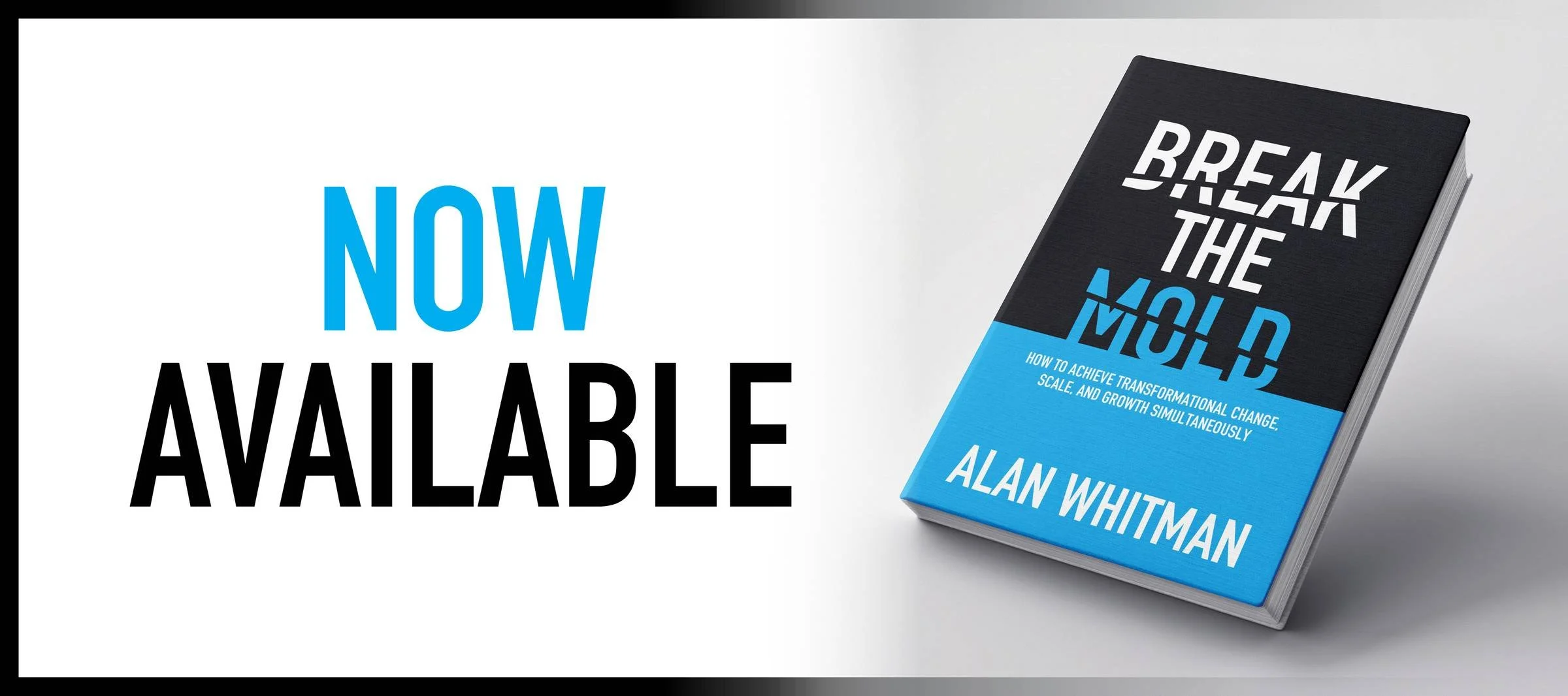
I've distilled all my growth, scaling, and transformation principles into one tactical guide—told through the lens of storytelling. Order my book, Break the Mold: How to Achieve Transformational Change, Scale, and Growth Simultaneously, today on Amazon.
Why We Took Private Equity Investment at Nichols Cauley
I still find private equity to be a very misunderstood thing. Whether you like it or hate it, I think it’s important to understand what actually happens when a strategic sponsor, like private equity, enters the growth and scale equation for a business.
So, in that spirit, I want to take you all behind the scenes and share why we, Nichols Cauley, decided to partner with a strategic sponsor in Madison Dearborn Partners, LLC.
When people ask me:
"Alan, why did you take private equity investment?"
Most people are expecting me to talk about capital. And while money certainly matters, if you think PE is just a money tree you walk up to and shake, you are missing the bigger picture. There are thousands of PE firms and plenty of other forms of strategic sponsors that all can provide capital. The money is a catalyst, but not the differentiator.
So let me tell you the real story behind why we did this, what makes this deal different from most you’ve heard or read about, and what a strategic sponsor actually does for an organization like ours who is willing to lean into it.
I Was Skeptical Too
I'll say something publicly that I wrote about in my book: I was skeptical of PE for a long time.
When PE started showing up in the accounting profession in a meaningful way, my gut reaction was the same as most of my peers. We don't need outsiders shaping our future and if we’re comfortable growing at a healthy rate, why is it even needed?
The more I listened and learned, the more I realized PE wasn't a threat to what we were building. It was a lens. A fundamentally different way of looking at a business. The conversation shifted from "Will PE destroy what we've built?" to "What might PE add that we can't create on our own?"
So my stance on private equity (or any strategic sponsor) is this: don’t hate the player, hate the game.
Private equity is the player. The game? Building a company to be relevant and sustainable and all the prerequisites to that like growth, building scale, transformation, and innovation.
That’s the game every company is playing. So if a partner, like a private equity firm, enables you to play the game more effectively, isn’t that worth exploring? I sure think so… So here’s why we did.
This Wasn't a Traditional Deal
Before I explain the why behind private equity, I want to make it clear that this was a very different deal than you might typically hear about. This wasn't a PE firm acquiring a company and it wasn't a buyout. This was a case of three separate companies coming together intentionally to build something new, and private equity was going to be the accelerant.
Nichols Cauley. JGH Consulting. Partners Risk Services.
These three companies had already been working alongside each other for years. They saw the overlap in clients, the complementary capabilities, and a real gap in the market to deliver connected expertise across disciplines to small and midsized businesses and their owners in the Southeast. By bringing these capabilities together, they’d be better positioned to address the interconnected challenges business owners face, rather than solving them in isolation.
So the leaders of these companies had already started the process of coming together to build this new company before Madison Dearborn ever got involved.
They saw two opportunities to accelerate the journey once the three companies came together.
Bring in an experienced CEO to guide the scaling journey
Partner with a strategic sponsor who understood the vision well enough to accelerate it
I suppose it’s clear now that I was chosen as the CEO to lead the next chapter of Nichols Cauley and Madison Dearborn Partners, a premier PE firm with deep resources and a vast network, was selected as the strategic partner. Most importantly, Madison Dearborn has a partnering style built on strategic alignment and genuine collaboration and that's what made them the right fit.
We're aligned on a singular vision to provide big thinking and sophisticated financial strategies to an overlooked and underserved market. That means helping small and midsized businesses and their owners manage their business affairs, protect what they’ve built, and grow their wealth.
The X Factor Is the Discipline
Having a strategic partner changes the equation, no question.
When a partner, like private equity, enters the equation, many professional services businesses shift from lifestyle businesses (do your best, see how you did, and try better next year) to professionalized businesses that design strategies, lay intentional plans, and are expected to execute to drive results.
When you have a strategic partner, the rigor doesn't disappear when things get hard. You're responsible to deliver ROI and remain disciplined along the way, not just waiting to the end of the year to measure your results.
PE funds like Madison Dearborn are assets on the journey because they have seen this movie before. They've sat in boardrooms with a hundred different leadership teams navigating the same challenges we're navigating right now. So while I bring my own experience to the table, they bring theirs. Put those two things together and that's where the magic happens.
I’ve often said, and I’ll stand by my belief that PE is unlikely to make a mediocre company great. It’s a tool and a vehicle that, when paired with alignment and a compelling strategy, can take good companies and even great companies and make them better. I know the latter will be the case for Nichols Cauley.
How This Plays Out In Nichols Cauley
Nichols Cauley, JGH, and PRS were all highly successful and profitable companies before any of this happened. Without the people who were already doing great work inside these three organizations, it would have been unlikely that this partnership would have come to be. The reputation and history that made this deal possible were built by them.
The reality is that hiring and developing more people, deploying technology and automation, and building out more formal systems requires significant investment of financial and intellectual capital. As is the case in many owner-operator organizations, it’s the owners who have to fund those efforts, and in this case, those investments were being made slower than desired for understandable reasons.
Well, when PE enters the picture, it reduces risk for the partners, and now we’re in a position to make the investments desired to enable growth. Hiring senior leaders. Building out infrastructure. Developing systems and utilizing AI and automation. These are some of the necessary investments in order for us to build a more relevant and sustainable company—and now we’re making them.
The first year is where that foundation gets built. The right moves now pay off tenfold in years two, three, four, and five. The great thing is that Madison Dearborn has seen that story play out many times over and supports the journey.
So, as far as what’s in for everyone at Nichols Cauley? Well, more opportunities. Better tools. An alternative career path that doesn’t require sitting around and waiting for someone ahead of you to retire. Our partnership with Madison Dearborn will enable us to make the investments to become an even better organization, faster, and enable our people to achieve more. And that will present a number of opportunities and benefits to team members in the organization now, and those who decide to join us in the future.
Final Thoughts
I wrote in my book that embracing private equity reflects the true essence of breaking the mold. The paradox is simple: PE asks you to let go of total control in order to gain control of the future. It brings discomfort AND it brings greater possibility.
The companies that understand that paradox and lean into it with intention are the ones that realize what PE can actually do.
So that’s our story at Nichols Cauley and thus far, I’m seeing it being a great partnership and one that has greatly accelerated our ability to make the necessary investments to be a relevant and sustainable organization for years to come.
If you're part of the Nichols Cauley team, whether you've been here for years or just joined us, know that this vision only works because of you. I don't take that lightly.
Alan Whitman
CEO at Nichols Cauley
Whenever you're ready, here are 3 ways to engage with me, my content, and what we're building at Nichols Cauley:
Follow me on Linkedin for daily posts on leadership, thinking differently, and building a company in public.
Buy my book, Break the Mold, to read in depth about how to apply my principles to achieve transformational change, growth, and scale simultaneously.
Join us on the journey: View career opportunities at Nichols Cauley and join on us as we build something really special.