The danger of relying on big projects
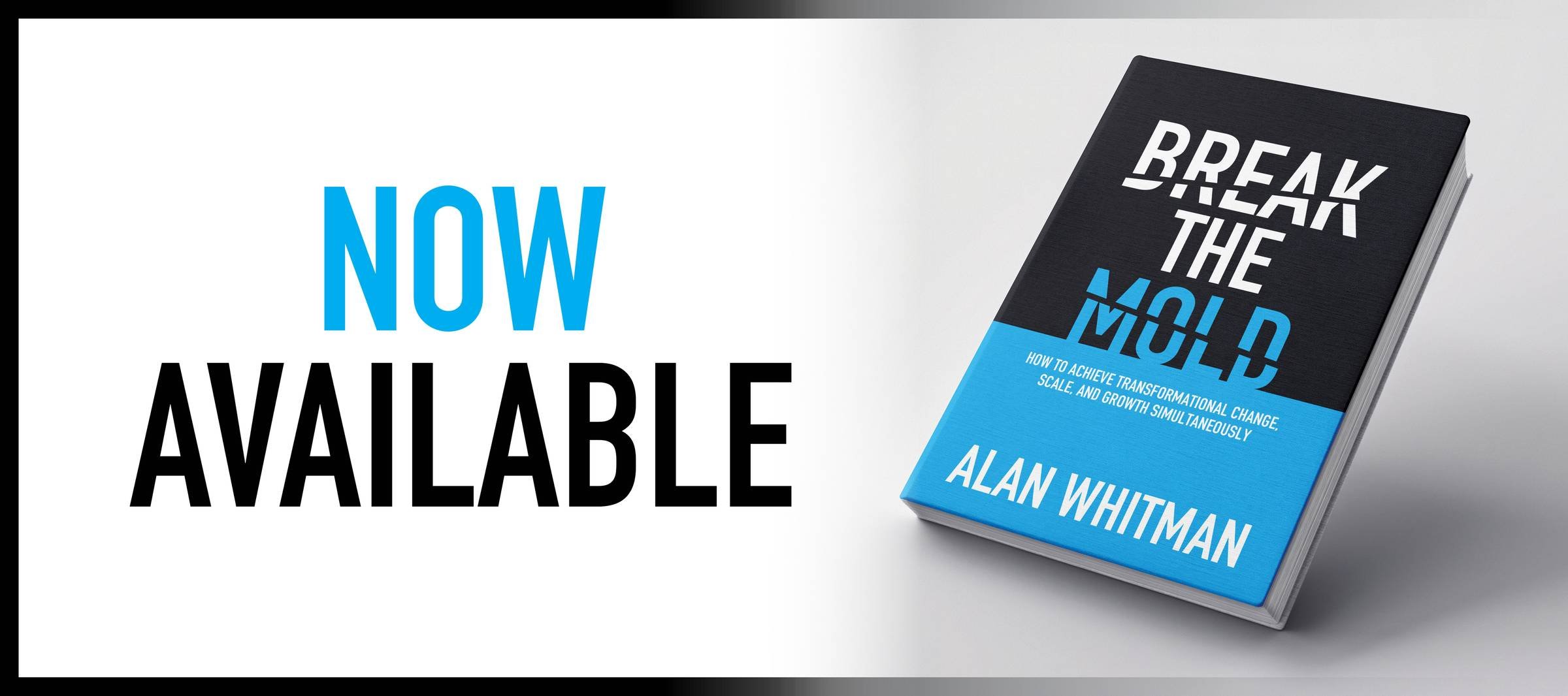
My book, Break the Mold, is now available for pre-order. Be one of the first to read it by placing an order on Amazon today. Pre-order my copy of Break the Mold.
Not all growth is the same. I've written before about the danger of chasing revenue for the sake of revenue—even though it's not aligned to strategy—and how it doesn't build scale or enable sustainable growth down the line.
There's another part of the growth and revenue equation that's equally as important: the size of projects and the makeup of your revenue structure.
If your entire year depends on landing a few large projects, you are not building a sustainable business. You're taking big swings and hoping you don't strike out. You're betting...and eventually, those bets (may) stop paying off.
(I've experienced it... more on that later)
And when they do, everyone acts surprised.
“How did we have such a bad year?” “What went wrong?”
Well, nothing necessarily went wrong... You just built your revenue and business model on a couple of giant dominoes and then were surprised when one of them didn't fall exactly the way you predicted.
I saw this happen again recently, and it perfectly illustrates the point.
A story to illustrate the idea
A team walked me through their revenue over several years:
$2m… $3m… $6m… $5m… projected $8m…
Now, on paper, that looks like great growth. Very strong CAGR. Any outside observer would say it is impressive.
But that $6m year was driven by a few very large projects hitting at once. The next year, several similar projects were expected to kick off again. Then they got pushed multiple times. Month after month, the start dates moved.
And suddenly the narrative shifted from “strong, growing practice” to “what happened here??” even though the underlying business was actually performing extremely well.
This is what happens when you chase big projects. Your entire storyline becomes feast or famine. In a good year, when they all land, you look like heroes, and the next year, you risk looking like failures who came up short. There is no middle ground.
And look, I get the temptation...
Big projects are exciting. They make people feel important. They create a loud splash in partner meetings.
But that is not how you build something sustainable.
I've lived it myself...
My personal experience
Early in my days at Baker Tilly, we were sitting at roughly $150m in revenue. So we weren't small, but big enough that you would think we could absorb some swings.
We had a large project that had been running for years. It was one of those cornerstone engagements that quietly props up the entire P&L. Then one year, the project wrapped up, and we didn’t have another one of that size to replace it.
Uh oh. I tell you what, I'll never forget how hard that hit us.
Partner comp took a massive punch, and it absolutely flattened the year. For a $100m firm, losing that one project made it look like a catastrophic blow to the business, even though nothing about the fundamental quality of the firm had changed.
It meant we hadn’t built a stable enough revenue base to withstand the loss of one large project. We were exposed. We were operating more like a project-chasing practice than a business built on a solid foundation of predictable recurring revenue.
That moment was pivotal for me.
It taught me that even well-run firms with great people, great clients, and strong fundamentals can fall into the trap of leaning too heavily on big engagements. And when you’re smaller — whether that’s 10 million, 20 million, 40 million — the impact of losing one or two of those is magnified exponentially.
A better way to build
Whenever I talk to leadership teams about this, I eventually say some version of:
“You are chasing projects. Let’s build a business instead.”
And building a business means creating a layered revenue model:
Smaller and mid-size work that gives you consistency
Recurring relationships that become the stable engine underneath
Larger projects that push you beyond your baseline rather than define your baseline
This is why I tell teams to stop thinking like hunters and start thinking like business builders.
This has nothing to do with changing how you sell. It has everything to do with changing how you think.
It means looking to productize services or build "off the shelf" capabilities. It means evaluating your pipeline and associated risk. It means planning for future years differently and being honest about what is truly predictable versus what is simply hoped for.
Most firms don't slow down long enough to get strategic about the foundation. They are too busy focusing on the next whale. But the firms that succeed long term are the ones that intentionally build a base of recurring revenue from smaller, consistent projects—then layer the larger projects on top.
Now, if the big stuff gets delayed, the entire business does not wobble.
And that's how you build a sustainable business that lasts.
The final question
If you are leading a firm today, ask yourself:
“Have we built a sustainable revenue base, or are we just chasing big projects and hoping the timing works out?”
Be honest. Because even if you are riding the high of landing big projects right now, there will come a day when that won't be the case. I guarantee it.
So get ahead of it. Take a look in the mirror and evaluate if you need to expand your base with recurring revenue. What productized services can you offer to accomplish that? What baseline service offerings get you in the door of new clients and open opportunities for expansion?
When you rely on large projects to meet or exceed your revenue and growth goals, you're relying on hope... and hope isn't a strategy.
With intention,
Alan D Whitman
Whenever you're ready, here are 3 ways to engage with me, my content, and what we're building at Nichols Cauley:
Follow me on Linkedin for daily posts on leadership, thinking differently, and building a company in public.
Buy my book, Break the Mold, to read in depth about how to apply my principles to achieve transformational change, growth, and scale simultaneously.
Join us on the journey: View career opportunities at Nichols Cauley and join on us as we build something really special.