People AND numbers
During my time as CEO of Baker Tilly US from 2015-2023, we grew the firm from $475m to $1.5B, AND were known for having a great culture.
And I'll tell you, culture is incredibly important to me. I believe that a strong culture is an accelerant for great results.
So it may surprise you (or if you know me well, maybe not...) that I think the phrase "people before numbers" is misleading.
Why? Because it suggests that great culture and outsized results are mutually exclusive. That one simply MUST come before the other…
And that’s not my experience.
The reality?
Organizations that succeed in being relevant and sustainable don’t choose between people and results. They achieve great results with great people doing great work. I’ve seen it first hand.
It’s not an either/or. It’s a both/and.
The false choice
Somewhere along the line, many leaders started talking as if caring about people and caring about performance are two mutually exclusive things.
You hear it all the time:
“We don’t want to push our people too much and jeopardize our culture.” “We’re not driven by numbers.”
“We’d rather focus on our people than on profit.”
"We're a people-first organization."
These comments suggest that caring and empathy live on one side of the equation, and accountability and performance live on the other—and there's simply no world where the two sides can coexist.
I don’t buy that.
The thing is, when you don’t drive results, you don’t protect your people! You put them at risk or stall their growth.
You can’t develop people in a stagnant organization. You can’t retain talent in a firm that isn’t growing. And you can’t build a sustainable business if all you do is “care” without direction, discipline, and performance.
Every purpose-driven organization still has a financial responsibility. Even the most mission-oriented firm can’t fulfill its purpose if it’s not financially healthy.
So when leaders romanticize the idea of putting people “before” results, they may be unintentionally setting their people up for future difficulty or struggle.
And at the end of the day, that’s not very supportive of the “people first” idea.
The tie between culture and results
I've experienced firsthand that culture and results cannot only coexist, but the two are actually deeply connected. Firms that get this right realize the link between the two...
They invest in their people so they can perform. They drive performance so they can invest in their people.
It’s a flywheel, not a choice.
During our run at Baker Tilly—a time of aggressive growth and performance—our culture was stronger than ever!
We built a culture of collaboration and accountability centered on a shared vision and strategy.
We expected a lot from our people, and we invested in their development to support them along the way.
We asked people to stretch, grow, and think differently, and people felt a part of a greater cause.
We didn't try to defend and protect our culture, but we sought to constantly enable a strong culture that evolved over time.
Our culture and people fueled our numbers and results—and the results further fueled our people development and culture building.
That’s what people AND results look like.
Look, when we treat high performance as anti-people and anti-culture, we ignore the reality that people like winning!
They want to know where we're headed, the role they play in getting there, and they gain energy and meaning from not only seeing the collective organization achieve its vision, but feeling pride in knowing they played a role in getting there.
That will do wonders for enabling a strong culture...
The leadership tightrope
Okay, so how do you, as a leader, embrace the duality of people/culture AND results/numbers? How do you establish the flywheel and let it work its magic?
Well, like most things in leadership, it requires intentionality, consistency, and discipline.
Intentionality means setting a clear vision and strategy, and communicating it relentlessly. People want to know where they’re headed, why it matters, and how their role contributes to the broader mission. That clarity is a form of respect.
Intentionality extends to how you connect with and develop your people, too. It means designing opportunities for them to learn, stretch, and grow in meaningful ways. It means removing barriers that stall their development and ensuring that every person has a line of sight between their work and the firm’s success.
Consistency is what builds momentum and trust. You can’t be visible only when things are going well. You can’t champion culture one quarter and disappear the next. Consistency means showing up with the same focus, energy, and message.
It means investing time with your people and being consistent with your message and narrative. And it means holding people accountable to the standards you set.
When people know what’s expected and that those expectations matter, they perform at a higher level.
Finally, discipline is what keeps it all from falling apart when the pressure mounts. Discipline is continuing to invest time with people in intentional ways, even when it feels easier to write it off. It’s sticking to the strategy when the temptation is to chase short-term wins. It’s holding firm on the values and behaviors that define your culture, even when doing so feels inconvenient.
The best leaders I know treat discipline as a form of love for the organization and its people. It’s the willingness to do the hard, often invisible work that sustains both results and culture over the long run.
The question for every leader
If you’re leading an organization today, I encourage you to take an honest assessment:
“Am I using culture and people as a shield to avoid the discomfort of performance expectations?”
And if so, why do you believe that the two can't coexist?
And, to take it one step further, ask a new question:
"What will it take to have a strong culture AND achieve incredible results?"
If you get that balance right, magic can happen.
It’s not “people before results.” It’s not “results before people.”
It’s “people AND results.”
When you get that right, you don’t just build a strong culture or a strong bottom line; you build a relevant and sustainable organization to succeed over the long haul.
With intention,
Alan D Whitman
Whenever you're ready, here are 3 ways to engage with me, my content, and what we're building at Nichols Cauley:
Follow me on Linkedin for daily posts on leadership, thinking differently, and building a company in public.
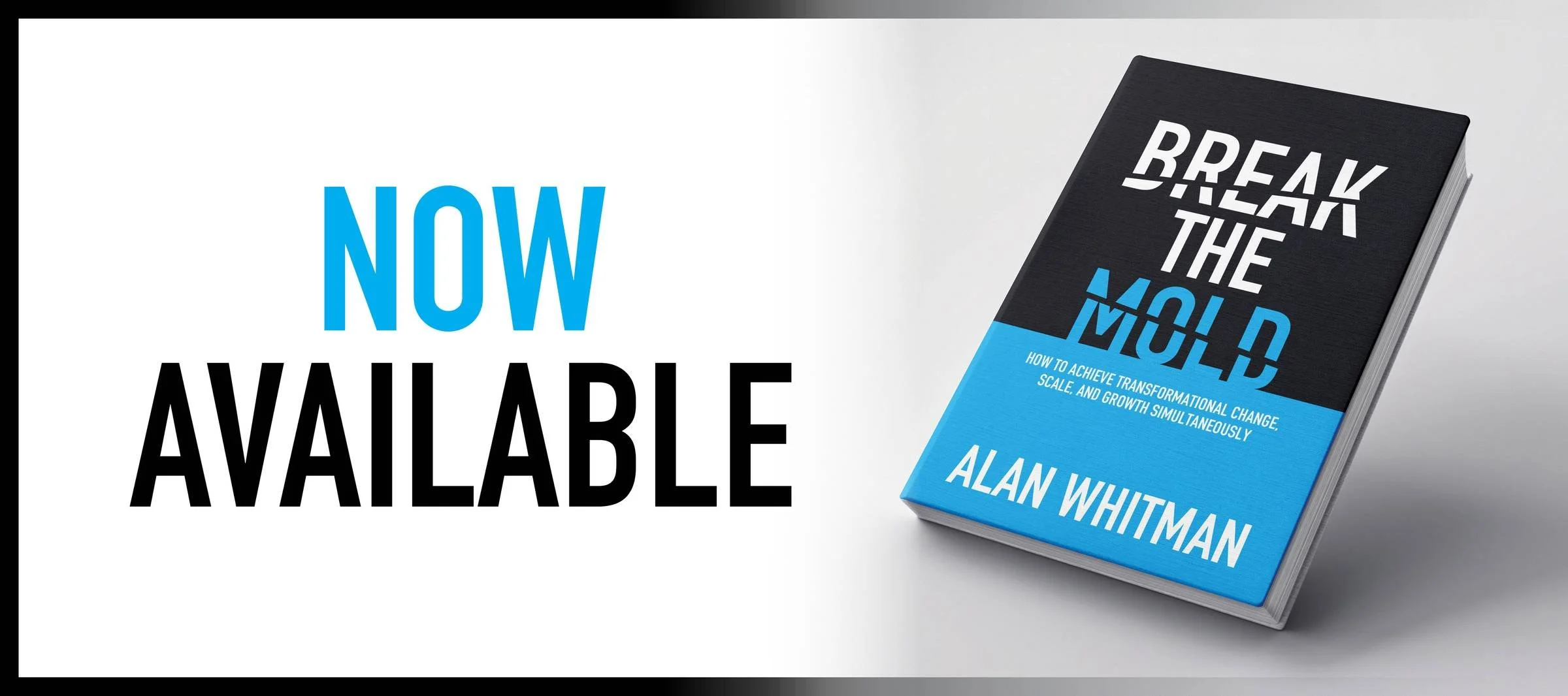
Buy my book, Break the Mold, to read in depth about how to apply my principles to achieve transformational change, growth, and scale simultaneously.
Join us on the journey: View career opportunities at Nichols Cauley and join on us as we build something really special.